
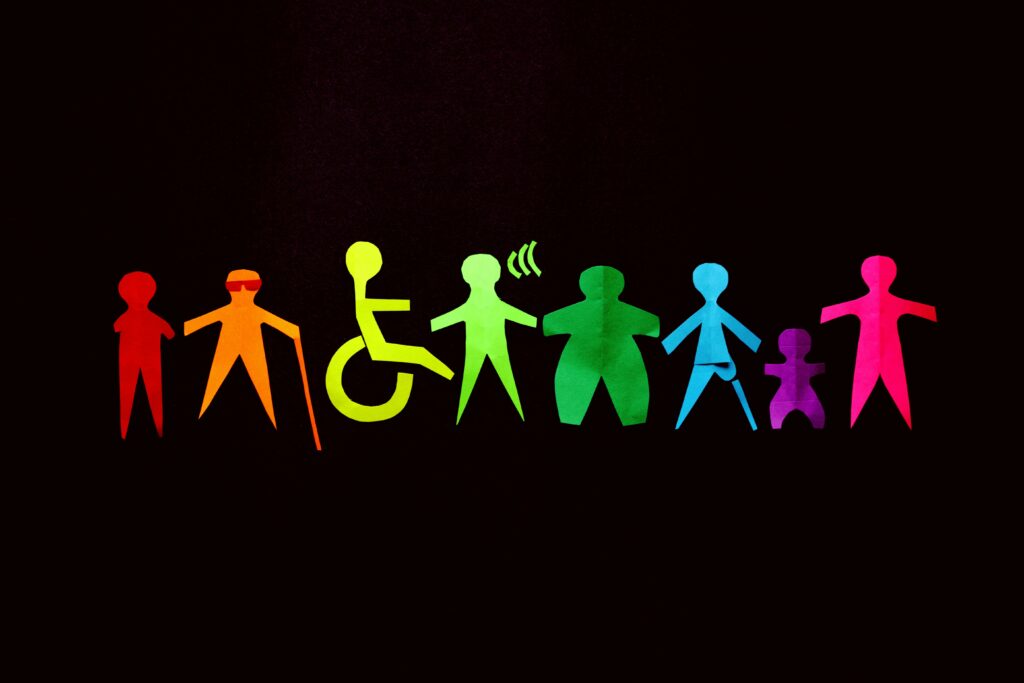
When it comes to accessibility, many people mistakenly believe it’s only relevant for individuals with physical disabilities, such as those who use a wheelchair. While mobility issues are a significant consideration, accessibility extends far beyond physical limitations. It encompasses a wide range of needs, including cognitive, sensory, and mental health challenges. Accessibility is about ensuring everyone can fully engage with the world, regardless of their circumstances.
In this blog, we’ll explore the different types of accessibility impairments and disabilities, debunk common myths, and emphasise the importance of inclusive design. We will also look at how individuals with accessibility needs can play a vital role in improving products and services by joining our platform.
Categories of Accessibility Impairments
Accessibility needs can be grouped into several broad categories. Understanding these categories is crucial for creating inclusive environments:
1. Physical Impairments
Physical disabilities impact an individual’s ability to carry out activities that involve movement or physical exertion. Examples include:
- Mobility challenges, such as using a wheelchair, crutches, or prosthetics
- Chronic conditions, including arthritis or multiple sclerosis (MS)
- Temporary impairments, like recovering from surgery or a broken limb
2. Sensory Impairments
Sensory disabilities affect one or more senses and include:
- Visual impairments, such as blindness, low vision, or colour blindness
- Hearing impairments, including deafness or partial hearing loss
- Dual sensory loss (deafblindness)
3. Cognitive and Learning Disabilities
Cognitive and learning disabilities influence how individuals process information, learn, or solve problems. Examples include:
- Dyslexia or dyscalculia
- Autism spectrum disorders (ASD)
- Attention deficit hyperactivity disorder (ADHD)
- Memory issues, such as those caused by dementia
4. Mental Health Conditions
Mental health is an essential yet often overlooked aspect of accessibility. Conditions include:
- Anxiety and depression
- Post-traumatic stress disorder (PTSD)
- Bipolar disorder
5. Temporary Impairments
Accessibility isn’t just about permanent conditions; temporary impairments also require attention. For instance:
- Recovering from an injury
- Temporary vision changes due to medication
- Hearing loss caused by an ear infection
Addressing Common Accessibility Myths
Myth: Accessibility Affects Only a Small Group of People
It’s a common misconception that accessibility is only relevant to a small percentage of the population. In reality, around 15% of people globally—approximately 1 billion individuals—live with some form of disability (World Health Organization). In the UK, the Department for Work and Pensions’ Family Resources Survey indicates that 16.1 million people had a disability in the 2022/23 financial year. This represents 24% of the total population (UK Disability Statistics).
Myth: Making a Website Accessible Is Expensive and Time-Consuming
Incorporating accessibility features at the start of a project is often cost-effective. When accessibility is considered from the beginning, it has minimal impact on time and budget. Retrofitting accessibility later, however, can lead to costly and time-consuming changes (Forrester Research).
Myth: Accessibility Can Be Addressed Quickly at the End of Development
Addressing accessibility issues at the end of a project is inefficient. Retrofitting accessibility may even necessitate significant redesigns, which is why proactive inclusion is essential.
Research has shown that integrating accessibility features at the beginning of a project is far more cost-effective and time-efficient. The Forrester Wave™ report highlights how digital accessibility platforms can help organizations address issues early, reducing the need for costly retrofitting (Forrester Research).
In addition, Microsoft’s study on accessible technologies noted that addressing accessibility early leads to better outcomes, such as improved customer experience, wider talent recruitment, and enhanced employee morale (Microsoft Accessibility Study).
To avoid costly redesigns, Forrester’s research advocates for using digital accessibility platforms early to identify and fix issues proactively, ensuring that accessibility is woven into the design process from the start (Forrester Research Digital Accessibility Platforms).
Myth: Accessibility Is Just About Adding Alternative Text to Images
While alternative text (alt text) is an important component of digital accessibility, it is only one part of a much broader effort. Accessibility encompasses a wide range of considerations to ensure that all users, including those with disabilities, can fully interact with digital content.
A comprehensive approach to web accessibility includes:
- Proper heading structures: Well-organized headings allow users with screen readers to easily navigate and understand page content, facilitating a better user experience. As Forrester Research emphasizes, accessibility features must be integrated from the start, including an intuitive structure for visual and non-visual users alike (Forrester Research).
- Sufficient colour contrast: Ensuring that text stands out clearly against its background is crucial for users with low vision or color blindness. WebAIM reports that insufficient contrast can make content almost unreadable for many users, underlining the need for contrast ratios that meet accessibility standards.
- Functional controls: All interactive elements, such as buttons and forms, should be operable by users with various disabilities. This includes ensuring that users can complete tasks through assistive technologies like screen readers or voice control. The W3C Web Accessibility Initiative (WAI) provides extensive guidelines for ensuring that all controls are accessible and functional (W3C WAI).
- Keyboard navigation: Many users rely on keyboard navigation rather than a mouse, especially those with motor impairments. The Web Accessibility Initiative (WAI) stresses that websites should be fully navigable via keyboard to accommodate these users (W3C WAI).
In short, accessibility is about creating an inclusive experience that goes far beyond alt text for images. It involves thoughtful design choices across all aspects of a website or digital product, ensuring usability for people with a wide range of abilities.
Myth: Accessibility Overlays Can Solve All Accessibility Issues
Overlays alone are insufficient for addressing accessibility barriers. While they may provide quick fixes, they often fail to resolve the underlying issues and can introduce new problems. For example, accessibility overlays typically address only surface-level issues and may overlook more complex challenges related to user experience. Furthermore, overlays may not function well with all assistive technologies, leading to a poor experience for users.
As noted by Level Access, overlays do not resolve the full range of accessibility concerns and can create a false sense of compliance (Level Access).
Access Advisors also points out that overlays can mask existing accessibility issues, making it harder for organisations to fully address the root causes of accessibility barriers (Access Advisors).
Moreover, TPGi highlights that relying on overlays alone only solves about 30-50% of accessibility issues, leaving many unresolved and possibly even creating new barriers for users (TPGi).
A truly accessible experience requires a comprehensive approach that goes beyond overlays, addressing all aspects of accessibility from the ground up, as emphasised by experts in the field like Accessible Web (Accessible Web) and the American Foundation for the Blind (AFB).
Myth: Automated Tools Can Fix All Accessibility Issues
While automated tools are useful, they can only detect around 25–35% of accessibility conformance failures. Comprehensive accessibility requires manual testing and feedback from individuals with lived experience of accessibility challenges.
Myth: Accessibility Is Optional
Ignoring accessibility can lead to legal consequences. Companies like Netflix and Domino’s have faced lawsuits due to non-compliance (BBC). Beyond legal risks, inclusive design fosters trust and creates a more welcoming environment for all users.
The Accessibility Gap
Despite growing awareness, many products and services still fail to meet accessibility standards. Research shows:
- 71% of people with disabilities will abandon a website that is difficult to use (Click-Away Pound Report).
- A significant number of websites fail to meet basic accessibility standards, often missing the mark on key accessibility features. WebAIM reported that across a sample of one million home pages, there were an average of 56.8 accessibility errors per page.
This gap presents an opportunity for businesses to enhance their offerings and build loyalty by addressing accessibility effectively.
The Importance of Inclusive Design
Inclusive design is not just about supporting those with disabilities – it improves the experience for everyone. For instance:
- Closed captions help people who are hard of hearing but are also useful in noisy environments.
- Voice-activated assistants, originally created for accessibility, are now widely used by the general public.
By involving individuals with accessibility needs in the design process, businesses can identify and overcome barriers, leading to better products and services.
Why Join Our Platform?
At Yantu, we connect user researchers with individuals who have accessibility needs. By joining, you can:
- Make a Difference: Help shape products and services that work for everyone.
- Share Your Insights: Guide designers and developers in creating truly inclusive solutions.
- Be Part of Change: Contribute to the future of accessibility and ensure no one is left behind.
For businesses, partnering with us means access to a diverse pool of participants who can provide valuable feedback, ensuring your products are inclusive and meet real-world needs.
Conclusion
Accessibility is not just about compliance; it’s about creating a world where everyone can participate equally. Whether addressing physical, sensory, cognitive, or mental health impairments, inclusive design is essential.
If you’re someone with an accessibility need or a business committed to inclusive design, we’re here to help. Join our platform today and become part of a community dedicated to making a difference.



